

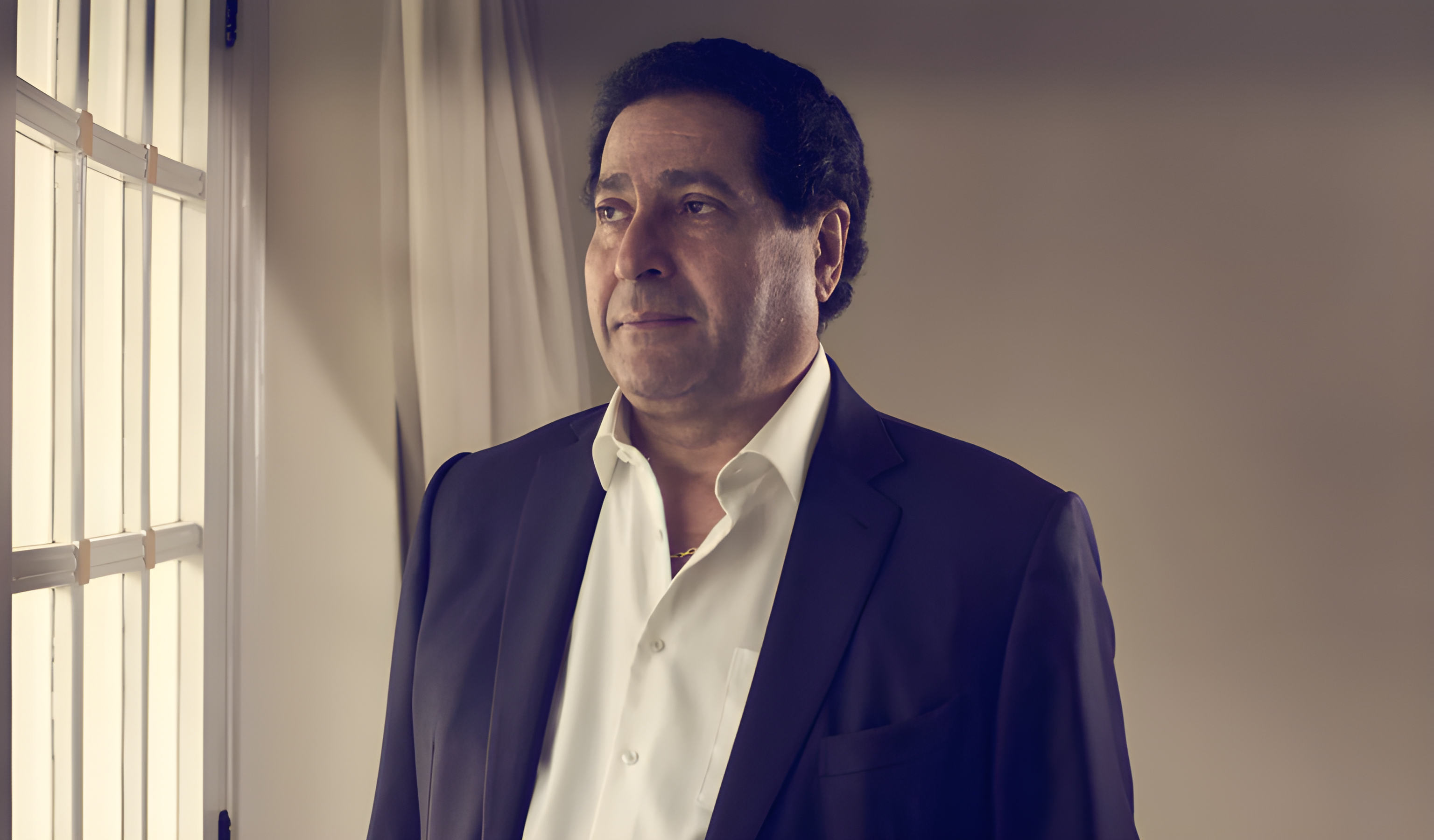
2022, the year of economic rebound? In a context of economic uncertainty, TelQuel questions the leaders of major companies to gather their predictions. Rarely seen in the media, the CEO of Laprophan, Farid Bennis, has agreed to analyze for TelQuel the major challenges of the year ahead. According to his analysis, the combination of the pandemic and the fight against climate change allows our country to position itself as a credible alternative to supplies from Asia.
TelQuel: The sudden resurgence of the virus through the Omicron variant tempers hopes for a significant economic rebound in 2022. What opportunities and challenges do you foresee in this new year?
Farid Bennis: The resurgence of the virus through the Omicron variant, which is much more contagious than the Delta variant, presents a new challenge for our healthcare system and our economy, even though this variant is less virulent. It remains difficult at this time to predict whether this new wave will allow us to move to an endemic stage or if we will encounter a new variant. In this context, making epidemiological or economic forecasts is quite a gamble. This new variant of SARS-CoV-2 indeed poses many challenges: disruptions in the global supply chain with logistics costs that have sometimes multiplied; raw material costs, particularly in the pharmaceutical industry, which have skyrocketed. All this is happening in a context where selling prices are set by the administration and where several affordable drugs risk simply disappearing and being replaced by others at much higher prices. Medicine is not just a commodity; it is essential for our health. The policy of lowering prices has a hidden cost that is exorbitant: it is the disappearance of products priced below 50 dirhams. We need to stop the populist announcements of price reductions and instead accept raising them by a few dirhams to save them, while focusing on those priced over 200 dirhams! Fortunately, there are not only challenges but also opportunities to seize for our country. Our geographical proximity to Europe and our position as a hub for Africa open up many prospects in several industries, including the pharmaceutical industry. I believe we can quickly become the "new India" of Europe in this field, among others in the pharmaceutical industry, thanks to the royal foresight in the 1990s through free trade agreements with Europe and the United States.
TelQuel: The "Made in Morocco" mindset now permeates the economic actors. How can we take advantage of the global crisis exit to better integrate Moroccan production into international value chains?
Farid Bennis: During the pandemic, our pharmaceutical industry was able to meet over 80% of the medication needs outlined in the Covid protocol. Even the partial production of vaccines, once considered unattainable, is becoming a reality. Several national industries are capable of rising to the challenge of "made in Morocco" and integrating our production into the global value chain. The local integration rate in the automotive industry has seen a significant improvement, particularly through the manufacturing of engines at the Peugeot site in Kénitra, and this trend continues. In the chemical and para-chemical sectors, OCP has significantly improved the added value of its exports in recent years with the production of fertilizers and continues to do so. In textiles and clothing, we have seen the emergence of 100% Moroccan brands. The combination of the pandemic and the fight against climate change allows our country to position itself as a credible alternative to supplies from Asia, which are penalized by their carbon footprint and the freight costs that have practically multiplied. The "made in Morocco" is already here. It is up to us, economic operators, to continue on this path and above all to keep believing in it while overcoming the last obstacles.
TelQuel: A significant social shift seems to have taken place in the kingdom. The rapid implementation of universal health insurance is a testament to this. For employees, the crisis has been tough. Are you considering reconfiguring your HR policy in light of this global awareness of the importance of human capital?
Farid Bennis: Allow me, first of all, to commend this revolutionary initiative of His Majesty the King, may God assist Him. This "revolution of the King and the People" is a major act equivalent to that of General de Gaulle at the end of the world war with the creation of social security, an act that was established here in a very difficult context. The generalization of health insurance will have very positive consequences, both in terms of public health, workplace productivity, and development prospects for the entire health ecosystem, from the pharmaceutical industry to clinics and hospitals, not to mention healthcare professionals, but above all, the right and duty and sense of pride of belonging to a common destiny community. At Laprophan, all our employees and retirees have benefited from comprehensive health coverage for many years; we are indeed one of the first industrial companies, after OCP, to have generalized health coverage for all its employees. It is thanks to the contribution of hundreds of committed men and women that Laprophan has succeeded in the challenge of creating, right after independence, against all odds, and despite opposition and skepticism, a national pharmaceutical industry that has served as a protective shield for other operators who have emerged subsequently. For us, it is not so much about reconfiguring our social HR policy — this is already established — but rather about putting it at the service of our profession, which demands excellence and therefore continuous training to offer patients and healthcare professionals therapeutic solutions that are adapted and accessible to all.
TelQuel: What innovation, value creation, idea, or paradigm shift would you like to implement in your group in 2022?
Farid Bennis: In 2022, Laprophan will continue to reposition itself to face new challenges and consolidate its policy of quality medicines at accessible prices for the greatest number: indeed, our average price is the lowest on the market, and that is our DNA. This guiding principle gives meaning to our daily efforts. We also wish to undertake a collective approach and reach, with our fellow pharmacists and industrialists who wish to, the necessary size to match the ambitions of our country. In the field of pharmacy, a company that is over 70 years old and is still strongly present today is already a real challenge, so everything is possible for it. And finally, we hope to surprise you at our next meeting in 2022.